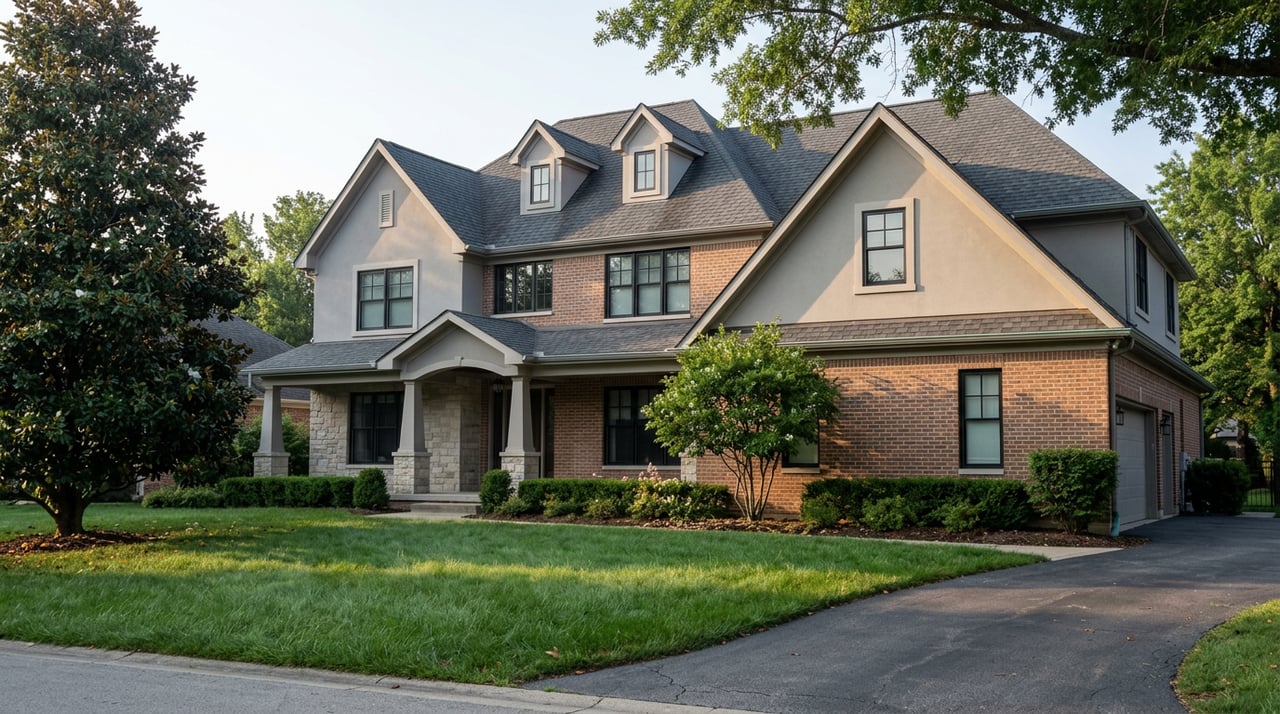
Lilburn vs. Tucker: Why the Lower Price Doesn't Mean the Easier Search
September 24, 2026
September 24, 2026
This past spring, the Lilburn City Council voted 3-1 to approve a conceptual master plan for Old Town, the kind of vote that usually gets buried on page six of a city newsletter. This one drew a crowd. Scott McCready, who has run Music on Main Street for fifteen years, welcomed the change. As WSB-TV reported, he said, "More people equals more business, hopefully." A few seats away, longtime resident Ted Wright worried about what the plan could mean for Lilburn City Park. He told the outlet, "We're losing everything here in the name of progress."
Both men are watching the same construction cranes and coming to different conclusions. That split is worth paying attention to if you're comparing Lilburn to Tucker right now, because the story those cranes are telling about supply is not the one most buyers assume.
Pull up listings in both cities this month and you won't see much daylight between them. As of September 2026, Lilburn homes were listed at a median of $425,000. Tucker homes were listed at a median of $419,000. Days on market sat at 46 for Lilburn and 48 for Tucker. On asking price alone, a buyer would reasonably conclude these are two versions of the same market.
| Lilburn | Tucker | |
|---|---|---|
| Median list price (Sept. 2026) | $425,000 | $419,000 |
| List price per square foot | $176 | $201 |
| Median days on market | 46 | 48 |
Even the per-square-foot numbers on the asking side put Tucker slightly ahead. If you stopped your research here, you'd walk away thinking Tucker is the marginally pricier of the two and otherwise comparable. That's not what happens once a house actually goes under contract.
Look past the list prices and into what's closing, and Lilburn stops looking like the easier, cheaper option. Over the three months ending August 2026, Lilburn homes sold for a median of $400,000, up 3.8% from the same period a year earlier. The typical home fielded three offers and went under contract in 40 days, down sharply from 54 days the year before. Sale price per square foot hit $205, up 9.9% year over year, which is meaningfully higher than the $176 per square foot sellers are currently asking.
That gap between asking and closing is the tell. When homes are trading for more per square foot than sellers are listing them at today, buyers are the ones pushing the number up, not sellers padding their listings. Thirty-six homes sold in Lilburn in August, up from 30 a year earlier, so this isn't a case of a handful of unusual sales skewing the picture. More houses are trading, and each one is drawing real competition.
Tucker doesn't show the same pattern. Redfin currently scores Tucker's market at 56 out of 100 on its competitiveness scale, describing it as "somewhat competitive," with the typical home there fielding closer to one offer rather than three. In the most recent 30-day window tracked by real estate data provider Orchard, Tucker's median sale price came in around $438,950, but 40.91% of active listings had already cut their asking price at least once. Homes were closing at 96.68% of list price, and only 13.64% of sales closed above the original ask, down from the year before.
Put plainly, Tucker sellers are still asking for a premium, but buyers are negotiating a real discount off that number more often than not. That's a very different experience than what's happening a few miles away in Lilburn, where the asking price is turning out to be closer to a floor than a ceiling.
Here's the part that surprises most people comparing the two: Lilburn is in the middle of one of the largest redevelopment pushes in its history, and none of it is loosening the market for buyers.
Atlanta-based RangeWater Real Estate closed on a 4-acre site on Railroad Avenue to build a project locally known as Porchline: 269 apartments alongside a 700-space parking deck, with about 400 of those spaces reserved for residents and 300 open to the public. It's a $75 million investment, and Mayor Johnny Crist called the project's public-private parking deck "essential" to growing the city's restaurants, retail, and jobs. Groundbreaking followed site work that began in spring 2025, with completion expected in late 2026 or early 2027.
A few blocks over, the Downtown Development Authority spent a decade assembling five parcels at First Avenue and Main Street into a 2.61-acre site now being developed as First & Main, a mixed-use project pairing commercial space with residential units. A letter of intent has been signed with a residential builder for that portion, though a firm delivery date hasn't been set. Nearby, Stanley Martin Homes is also building 80 townhomes known as Main Street Townes at Lilburn.
Notice what all three projects have in common. The apartments at Porchline are rentals. The 80 units at Main Street Townes are, per the city's own construction records, built for rent as well. The only for-sale residential piece in the pipeline is First & Main's still-undated townhome component. Nearly $75 million and then some is being poured into Old Town, and almost none of it adds a house that a buyer can actually purchase in the near term.
Meanwhile, the Downtown Development Authority's decade of parcel assembly has consolidated individual lots into larger projects. National headlines about the investment may draw more attention and more buyers to the city. Rising interest could help explain why Lilburn's for-sale market keeps tightening even in the middle of a construction boom.
Tucker isn't running a comparable redevelopment program right now. Its inventory is moving through more ordinary supply and demand, which is a large part of why its numbers are behaving more the way people expect a Metro Atlanta suburb's numbers to behave this year.
If your priority is finding a house you can actually win an offer on without a bidding war, Tucker currently gives you more room to work with. Sellers there are still pricing optimistically, but the sale-to-list ratio and the share of listings taking price cuts both suggest you have leverage to negotiate rather than escalate.
If you're drawn to Lilburn for its walkability, its park, or the promise of what Old Town is becoming, go in expecting competition, not a discount. The lower median price on paper reflects a market where the visible construction hasn't yet translated into more houses for sale, and where buyers are already paying above list on a per-square-foot basis. A prioritized offer strategy, a clear sense of your ceiling before you tour, and quick turnaround on due diligence matter more in Lilburn right now than they do in Tucker.
Neither city is doing anything wrong. They're just at different points in very different cycles, and the median price alone won't tell you which one you're actually stepping into.
Will any of the new construction in Old Town Lilburn actually be available to buy? Most of what's under construction right now, including the Porchline apartments and the Main Street Townes, is built for rent. The one for-sale residential piece in the pipeline, at First & Main, has a signed letter of intent with a builder but no confirmed delivery timeline yet.
Does Tucker's rate of price cuts mean something is wrong with that market? Not necessarily. A market where roughly 40% of listings adjust price at least once and the sale-to-list ratio sits just under 97% is behaving like a fairly normal, balanced market rather than a distressed one. It simply means sellers there are testing the top of the range and buyers have room to counter.
Comparing two suburbs on median price alone is a reasonable place to start and a risky place to stop. If you're weighing Lilburn against Tucker, or trying to figure out what either market actually rewards right now, I'd be glad to walk through the numbers behind your specific search. Audrey Bankhead has spent 25 years in Metro Atlanta real estate and title work, and knows exactly where these two markets diverge. Let's Connect.
November 5, 2026
October 29, 2026
October 22, 2026
October 15, 2026
October 8, 2026
October 1, 2026
September 24, 2026
September 17, 2026

September 10, 2026
No jargon, no pressure — just clear, hyper-local guidance from someone who's done this for 25 years.
Audrey Bankhead
620 Glen Iris Dr Ste 1-A Atlanta, GA 30308