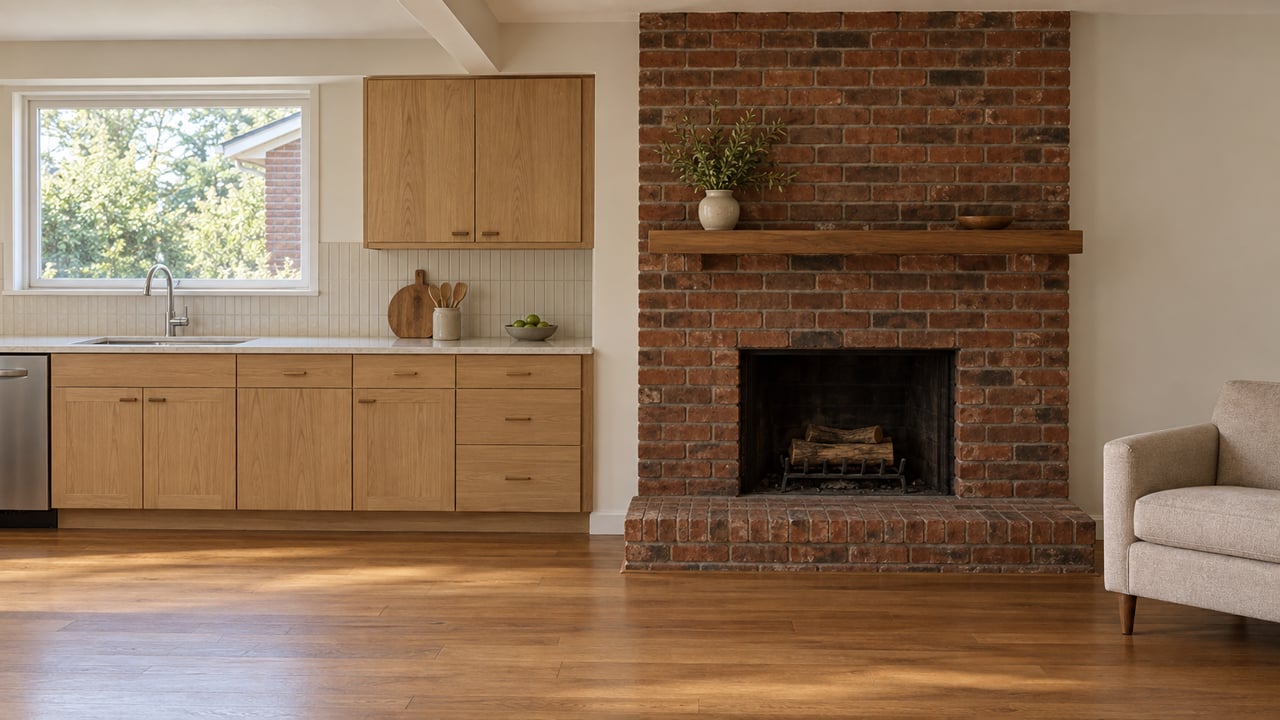
Tucker's Due Diligence Window Wasn't Built for a 1968 Ranch
October 1, 2026
October 1, 2026
What happens if your home inspector calls on day nine of a ten-day window and says he needs to come back with a moisture meter?
That is the conversation nobody prepares buyers for when they sign a contract on an older Tucker home. The due diligence period sounds generous on paper. In practice, on a house built before disco, it runs out faster than the calendar suggests.
Georgia's due diligence period gets described the same way on almost every real estate site you'll find: a negotiated window, typically somewhere between seven and fourteen days, that starts on the Binding Agreement Date, the day both buyer and seller have signed. During that stretch a buyer can walk away for any reason and get earnest money back. Once the deadline passes, the exits narrow to whatever contingencies are left in the contract, usually financing and appraisal.
Georgia Title & Escrow Company, a firm run by a Georgia closing attorney, calls this the buyer's "free look." That's accurate. It's also the same explanation you'll read whether the house in question is a five-year-old townhome in Snellville or a four-sides brick ranch on a quiet Tucker cul-de-sac. The mechanics don't change based on the house. What has to happen inside those mechanics does.
Over the twelve months ending in late September 2026, the median home that sold in Tucker was built around 1981, based on closings tracked across the city's MLS record. That's not a stray data point. It means more than half of what closed this year predates modern radon mitigation standards, current electrical code, and the encapsulated crawl space construction that's become standard in newer Georgia builds.
New construction did happen in Tucker this year, concentrated in communities like Parkstone Row and Chandler Run, but it made up only about 15 percent of sales. The rest of the market, the bulk of it, is a house old enough that its systems have a real chance of being original.
That matters because a ten-day due diligence window built around "schedule an inspector and wait" assumes the inspector's findings will be straightforward. On a 1981 house, or a 1968 house, they rarely are.
A general home inspection and a termite letter cover the basics almost anywhere in Georgia, since the state sits in a high termite-pressure zone and a standard inspection doesn't include wood-destroying organisms. On an older Tucker property, three areas tend to need extra attention, and each one has its own timing problem.
Radon testing. DeKalb County is classified by the EPA as a Zone 1 area, the highest radon potential category. Testing protocol requires roughly 48 hours to produce a valid result. If a buyer waits until day five or six of a ten-day window to order it, there may not be time left to review the result and act on it before the deadline. Home-Probe, a Georgia inspection company, flags this exact bottleneck and recommends starting radon testing the same day as the general inspection, sometimes even before it.
Crawl space condition, and specifically whether it's vented or encapsulated. Tucker's housing stock leans heavily on crawl space foundations from an era when venting was standard practice. In Georgia's humid summers, a vented crawl space often works against itself: warm outside air enters the cooler space underneath the house and condenses, adding moisture rather than removing it. Tracer-gas research cited by Crawlspace Medic, an Atlanta-area encapsulation contractor, found that roughly 40 percent of a home's first-floor air can originate in a vented crawl space, a share that drops under 6 percent once the space is properly sealed. On a house with original ductwork running through that space, that's not a cosmetic detail. It affects indoor air and it affects the framing underneath the floor a buyer is about to own.
The termite letter, treated as more than a formality. Georgia's termite pressure is high everywhere, but it compounds on a house with original crawl space framing and decades of accumulated moisture cycles. A WDO inspection here is doing real diagnostic work, not checking a box for the lender.
None of these three are exotic requests. They're just easy to schedule too late if a buyer treats day one of due diligence as "call the inspector" instead of "call the inspector, the radon tester, and ask about the crawl space in the same afternoon."
Tucker isn't one housing stock. A buyer touring the larger lots around Smoke Rise, closer to the country club, is often looking at homes with more space between systems and neighbors, sometimes with updates already done given the price point those lots command. A buyer looking closer to Main Street, in the pockets around Idlewood or the Northcrest area, is more likely to find an untouched 1960s ranch a short walk from Henderson Park and the Saturday farmers market downtown.
Both are Tucker. Both carry the same due diligence deadline once a contract is signed. What that deadline needs to accomplish is different depending on which street the house sits on, which is exactly why a general timeline explainer written for the whole state can't tell a buyer what to actually schedule first.
The due diligence period is negotiated, which means its length is a term a buyer can push on, not a fixed rule. As of late September 2026, Tucker's market gives buyers more standing to make that ask than it has in recent years. Active listings sit around 74 against current sales pace, producing roughly 6.1 months of supply. Homes on the market carry a median of 34 days before going under contract. Sellers have been landing close to 96 percent of their original asking price.
That combination describes a market where sellers are not fielding five competing offers by Friday. It's a market where a buyer can reasonably request twelve to fourteen days instead of the compressed three-to-five-day window that shows up in bidding wars, and can point to the age of the specific house as the reason. A seller weighing that request against 6.1 months of supply has less leverage to say no than a seller would have had in a tighter year.
The window works best when the order of operations is set before the ink dries, not figured out on day three.
That last step is the one buyers skip most often. A report that arrives on day nine of a ten-day window doesn't leave time to do anything with it except panic or waive it.
Does Georgia require a minimum number of due diligence days? No. The length is negotiated entirely between buyer and seller and written into the contract. Ten days is common, but nothing in state law sets that number. On an older home, it's worth asking for more than the default.
What happens if the inspector can't get out until day seven? A ten-day period can leave only three days after the inspection to review findings and negotiate, which is exactly why booking happens on day one, not after the excitement of a signed contract wears off.
A house built in 1981 isn't a problem. It's most of what's actually for sale in Tucker this fall. The due diligence period just has more work to do on that kind of house than the standard advice accounts for, and knowing that before the contract is signed is worth more than knowing it on day nine.
If you're weighing an offer on an older Tucker home and want a second set of eyes on what the contract timeline should actually look like, Audrey Bankhead spent years on the title and closing side before becoming a broker associate, and walks buyers through exactly this kind of timing before they sign. Let's Connect.
This article is general information, not legal, tax or financial advice. Consult a qualified professional about your situation.
November 5, 2026
October 29, 2026
October 22, 2026
October 15, 2026
October 8, 2026
October 1, 2026
September 24, 2026
September 17, 2026

September 10, 2026
No jargon, no pressure — just clear, hyper-local guidance from someone who's done this for 25 years.

Audrey Bankhead
620 Glen Iris Dr Ste 1-A Atlanta, GA 30308